

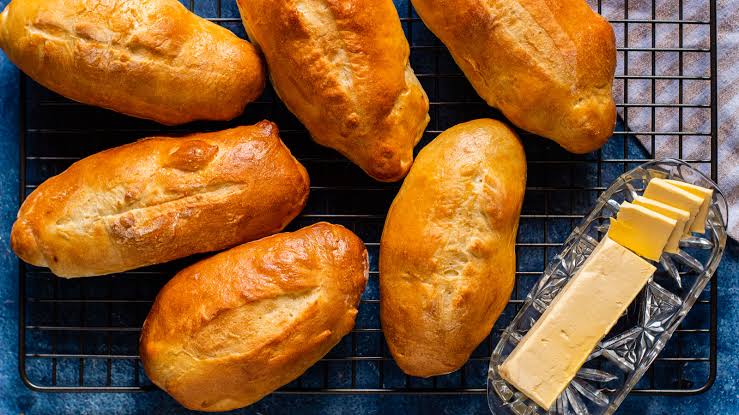
If you have ever bitten into a proper Cuban sandwich and wondered what made the bread taste different from everything else you have eaten it on, the answer is the bread itself. Cuban bread is not a generic hoagie roll or a dressed-up baguette. It is a specific bread with a specific history, a specific texture, and a flavor that no other bread quite replicates, which is exactly why finding the right Cuban bread substitute matters so much when the real thing is not available.
Understanding what Cuban bread actually is, how it is made, why it behaves the way it does in a sandwich press, and what comes closest when you cannot find it are all questions worth answering for anyone who takes their Cuban sandwich seriously. Whether you are shopping for the right loaf, baking at home, or improvising with what your grocery store carries, this guide covers everything you need to know.
What Is Cuban Bread
Cuban bread is a white bread with a thin, crispy crust and a soft, airy interior crumb. It is baked in long, flat loaves that look somewhat like a baguette but behave very differently in texture and flavor. The crust shatters under a sandwich press while the interior compresses and stays tender rather than turning chewy or gummy. That behavior is what makes it irreplaceable in a properly made Cuban sandwich.
The bread has deep roots in Tampa specifically. While Cuban bread originated in Cuba, it was Tampa’s Cuban immigrant community in the Ybor City neighborhood that developed the version most Americans associate with the Cuban sandwich today. Tampa’s Cuban bread tradition is distinct enough that there is a legitimate ongoing debate between Miami and Tampa over which city makes the authentic Cuban sandwich, with the bread itself being one of the central points of contention.
Tampa’s version of Cuban bread is traditionally made with lard, which contributes to the soft interior and the particular way the crust behaves under heat. Miami’s version sometimes substitutes butter or shortening. The difference is detectable to anyone who has eaten both versions side by side, though both are genuine expressions of the same bread tradition.
How Cuban Bread Is Made
Understanding the process explains a lot about why Cuban bread tastes and behaves the way it does, and it makes the question of a Cuban bread substitute much easier to answer.
The Ingredients
Traditional Cuban bread uses a short list of ingredients: white flour, water, yeast, salt, sugar, and lard. The lard is the ingredient that most distinguishes it from French or Italian bread, which are typically made without any fat in the dough. The lard coats the gluten strands during mixing, which produces a tender crumb that tears and compresses softly rather than springing back with the chewiness of a lean dough.
The sugar feeds the yeast during fermentation and contributes a very mild sweetness to the finished bread, which is part of why Cuban bread tastes slightly different from a plain French baguette even at the crust level.
The Palmetto Leaf Tradition
One of the most distinctive elements of traditional Tampa Cuban bread baking is the palmetto leaf, or more commonly a long piece of dried grass, placed along the top of the loaf before baking. The leaf or grass strip creates a score line down the center of the loaf as it bakes. This score controls where the bread expands during oven spring and produces the characteristic split along the top of a Cuban loaf.
In commercial bakeries today, a razor or bread lame often replaces the palmetto leaf, but many traditional Tampa bakeries maintain the practice as part of their identity and craft.
The Baking Process
Cuban bread bakes at high heat in a steam-injected environment, which is what produces the thin, crispy crust. The steam keeps the surface of the dough flexible during the early stages of baking, allowing maximum oven spring before the crust sets. Once the steam dissipates, the crust dries and crisps rapidly.
The result is a bread that is dramatically different from sandwich bread in a bag: crispy enough to shatter under pressure but tender enough not to fight back when you bite through a finished sandwich.
How to Make Cuban Bread at Home
For home bakers who want to attempt Cuban bread from scratch, the process is accessible with a few key pieces of technique.
Ingredients for one standard loaf:
- 3 cups all-purpose flour or bread flour
- 1 packet active dry yeast (2 and one quarter teaspoons)
- 1 teaspoon salt
- 1 teaspoon sugar
- 1 tablespoon lard, plus more for greasing
- 1 cup warm water, between 105 and 110 degrees Fahrenheit
Process:
Dissolve the yeast and sugar in the warm water and let it sit for five to ten minutes until foamy. This confirms the yeast is active before you build the dough around it.
Combine the flour and salt in a large bowl. Add the lard and work it into the flour with your fingers until the mixture resembles coarse crumbs with no visible chunks of lard remaining. Add the yeast mixture and mix until a shaggy dough forms.
Turn the dough onto a lightly floured surface and knead for eight to ten minutes until smooth and elastic. The dough should feel soft but not sticky. Add flour in small increments if it clings to your hands, but do not add so much that the dough becomes stiff.
Place the dough in a lightly greased bowl, cover with plastic wrap or a damp towel, and let it rise in a warm place for one to one and a half hours until doubled in size.
Punch down the dough and shape it into a long, flat oval, pressing it slightly flatter than a baguette to achieve the characteristic Cuban loaf shape. Place on a parchment-lined baking sheet and lay a piece of kitchen twine or dried grass along the center of the top surface.
Let the shaped loaf rise for another thirty to forty-five minutes while you preheat the oven to 400 degrees Fahrenheit. Place a small pan of hot water on the bottom rack of the oven to create steam.
Bake for twenty to twenty-five minutes until the crust is golden and the loaf sounds hollow when tapped on the bottom. Let it cool for at least fifteen minutes before cutting.
The home-baked version will not be identical to a commercial Cuban bakery loaf, but it will be significantly closer than any store-bought bread available as a Cuban bread substitute.
Cuban Bread Calories
Cuban bread is a white bread with lard in the dough, which puts it in a specific caloric range that reflects both the refined flour and the added fat.
A standard serving of Cuban bread, typically a two-inch slice or roughly one ounce of bread, contains approximately 100 to 120 calories, with around 2 to 3 grams of fat from the lard, 20 to 22 grams of carbohydrates, and 2 to 3 grams of protein. These figures vary depending on the specific bakery’s recipe and how much lard is used in the dough.
A full Cuban sandwich built on a six-inch section of Cuban bread adds the calories of the bread to the fillings, which typically include roast pork, ham, Swiss cheese, mustard, and pickles. The total caloric content of a complete Cuban sandwich ranges from roughly 500 to 800 calories depending on portion size and how much of each filling is used.
For people tracking Cuban bread calories specifically, the bread itself is comparable in caloric density to other white sandwich breads. The lard content adds fat that is not present in lean doughs like baguettes, but the difference per serving is relatively modest. The larger caloric variable in a Cuban sandwich is almost always the proteins and cheese rather than the bread.
The Best Cuban Bread Substitutes
When authentic Cuban bread is not available at your grocery store or local bakery, the question becomes which available bread comes closest in the ways that matter most for the application. For a pressed Cuban sandwich, the most important properties to replicate are the thin, crackly crust and the soft, compressible interior. For other uses, texture and flavor are weighted differently.
For Cuban Sandwiches
Italian bread loaf: The best all-around Cuban bread substitute for a pressed Cuban sandwich. Italian bread has a similar thin crust that shatters under a press rather than becoming chewy, and its interior is soft enough to compress without fighting back. The absence of lard makes the flavor slightly leaner, but the texture behavior is close enough that most people cannot identify the substitution in a finished, pressed sandwich. Look for a full loaf rather than a pre-sliced sandwich loaf to maintain the structural integrity needed for pressing.
French baguette: A reasonable but imperfect Cuban bread replacement. The baguette crust is often thicker and chewier than Cuban bread, and the crumb has more structure due to the lean dough. The texture under a press is less yielding than Cuban bread, which can make the finished sandwich feel denser. If using a baguette, look for a softer, less rustic version rather than an artisan baguette with a thick, hard crust.
Hoagie or submarine roll: Works in situations where pressing is not part of the preparation. The hoagie roll is softer throughout and lacks the crust behavior of Cuban bread, but it holds fillings well and is widely available. A toasted hoagie roll comes closer to the right texture than an untoasted one for use as a best bread for Cuban sandwich applications when authentic loaves are unavailable.
Ciabatta: An underrated Cuban bread substitute for pressed sandwiches. Ciabatta has a thin crust, an airy open crumb, and enough flexibility to press without becoming unpleasantly tough. The flavor is slightly more complex than Cuban bread due to the fermentation profile of ciabatta dough, but the texture behavior under a sandwich press is quite good.
Bolillo: If your grocery store carries bolillo rolls, commonly found in the Latin bread section, these are among the closest commercially available substitutes for Cuban bread. Bolillo is a Mexican white bread roll with a thin, crackly crust and a soft interior, and it is made with lard or shortening in many traditional recipes. The texture and flavor behavior are closer to Cuban bread than most alternatives available at a standard grocery store.
For Recipes Calling for Cuban Bread as Toast or Garlic Bread
For applications where the bread is being toasted or used as a vehicle for toppings rather than pressed, the substitution options expand significantly. Any soft white bread with a reasonable crust works here. Italian bread, a bakery white loaf, or even a good quality soft French roll all perform adequately when the structural requirements of a sandwich press are not in play.
What Does Not Work as a Cuban Bread Substitute
Sourdough: The thick, hard crust and chewy, tangy crumb make sourdough a poor substitute for Cuban bread in any application. Under a sandwich press, sourdough resists compression and produces a final product that is tough to bite through. The flavor profile also conflicts with the traditional Cuban sandwich fillings.
Whole wheat or multigrain sandwich bread: The texture and flavor profile of whole grain bread conflicts with the mild, tender character of Cuban bread. Sliced sandwich bread of any variety also lacks the structural integrity needed to hold together properly when pressed with filling inside.
Pita bread: Too thin and too flat for any Cuban bread application. Pita collapses completely under a press and does not have the right interior structure for sandwich building.
The Best Bread for a Cuban Sandwich: Priority Order
When you cannot find authentic Cuban bread and need to choose a substitute, rank your options in this order based on availability and texture performance:
First choice: Authentic Cuban bread from a local bakery or grocery store with a Cuban bread program. In Tampa, this is the obvious starting point before considering any substitute at all.
Second choice: Bolillo roll if available in the Latin bread section of your grocery store.
Third choice: Italian bread loaf, full-size, unsliced.
Fourth choice: Ciabatta loaf, pressed gently to flatten slightly before assembling the sandwich.
Fifth choice: Soft French baguette, ideally one that is not too crusty or rustic in character.
Last resort: Hoagie or submarine roll, toasted before assembling, used in situations where a sandwich press is not part of the process.
Why the Bread Matters More Than People Expect
A Cuban sandwich made on the right bread and a Cuban sandwich made on the wrong bread are noticeably different eating experiences even when every other ingredient is identical. The bread is not a neutral vehicle in this sandwich. It is an active participant in the final result.
The press is the moment where the bread’s role becomes most apparent. A proper press on a Cuban loaf produces a sandwich that is flat, cohesive, crispy on the outside, and hot and melted throughout. The bread compresses without turning into a dense mass because the lard-enriched crumb has enough give to yield without becoming gummy. The crust shatters slightly when you bite in, which releases the heat and steam from the interior and creates the textural contrast that makes a pressed Cuban sandwich satisfying in a way a cold or unpressed sandwich never quite achieves.
No substitute fully replicates this. But understanding which substitute comes closest, and why, means that even when the authentic bread is not available, the sandwich you make is as good as it can possibly be.
Key Food Tampa Carries Authentic Cuban Bread
If you are in Tampa and looking for the real thing rather than a substitute, Key Food Tampa stocks authentic Cuban bread that reflects this city’s baking tradition.
Tampa is one of the few places in the world where Cuban bread is a genuine local product with real community roots, and the Cuban bread available at Key Food Tampa is baked for the kind of sandwiches Tampa residents grew up eating. Whether you are building a proper pressed Cuban at home, slicing it for garlic bread alongside a weeknight dinner, or picking up a loaf because no substitute has ever quite satisfied the way the original does, Key Food Tampa has it ready.
Come in and pick up a loaf. The best Cuban bread substitute is still just a substitute. The best bread for a Cuban sandwich is the one Tampa has been baking for over a century.
Frequently Asked Questions
What is the best Cuban bread substitute for a pressed Cuban sandwich?
Italian bread loaf is the most widely available substitute that behaves closest to Cuban bread under a sandwich press. Bolillo rolls are an excellent alternative if available in the Latin bread section of your grocery store. Both have thin crusts that shatter under pressure and soft interiors that compress without becoming gummy.
What is Cuban bread replacement when baking at home?
If you cannot find Cuban bread and do not want to bake it from scratch, ciabatta is one of the better commercial substitutes for home Cuban sandwich making. Its thin crust and open, airy crumb press more like Cuban bread than most other widely available options.
How many Cuban bread calories are in a serving?
A standard one-ounce serving of Cuban bread contains approximately 100 to 120 calories, with 2 to 3 grams of fat, 20 to 22 grams of carbohydrates, and 2 to 3 grams of protein. These figures vary by bakery recipe.
What makes Cuban bread different from French bread?
Cuban bread is made with lard in the dough, which French bread traditionally is not. The lard produces a softer, more tender interior crumb and a thinner crust that behaves differently under heat and pressure. Cuban bread also contains sugar, which gives it a slightly different flavor profile than the lean, plain dough of a classic French baguette.
What is the best bread for a Cuban sandwich if Cuban bread is unavailable?
In priority order: bolillo roll, Italian bread loaf, ciabatta, soft French baguette, and hoagie roll as a last resort. Avoid sourdough, whole grain breads, and sliced sandwich bread, which do not replicate the texture behavior of Cuban bread under a press.
How do I make Cuban bread at home?
Cuban bread is made from white flour, water, yeast, salt, sugar, and lard. The dough is mixed, kneaded, allowed to rise, shaped into a flat oval loaf, and baked at high heat with steam to produce a thin, crackly crust. A full step-by-step method is included in the how to make Cuban bread section above.
Can I use regular sandwich bread as a Cuban bread substitute?
Regular sliced sandwich bread is not a suitable substitute for Cuban sandwich applications. It lacks the crust structure needed to hold up under a press and becomes flat and gummy rather than crispy and cohesive. For any Cuban sandwich preparation, a bakery-style loaf is strongly preferable to pre-sliced sandwich bread.