

Standing at a seafood counter and not knowing the difference between one white fish and another is one of the more common grocery store moments nobody talks about. The fillets look similar. The names are unfamiliar or interchangeable in your memory. The price differences seem significant but unexplained. And the person behind the counter is waiting.
White fish is one of the most versatile protein categories in the kitchen, but it is also one of the most misunderstood at the point of purchase. Knowing the differences between the most common types of white fish to eat, understanding what separates an everyday fillet from a premium ocean variety, and knowing what freshness actually looks like at the counter are skills that change how you shop and how the food turns out.
This guide covers the varieties worth knowing, from mild and affordable everyday options to the types of expensive fish to eat when the occasion calls for something better, plus the ocean types of fish to eat that bring a different flavor profile and texture to the table entirely.
What Makes a Fish a White Fish
White fish refers to fish with white or near-white flesh, a mild to moderate flavor profile, and a lean texture with low fat content compared to oily fish like salmon or mackerel. The low fat content is part of what makes white fish so versatile in the kitchen. It takes on seasoning readily, cooks quickly, and works across a wide range of preparations from simple pan-searing to baking, frying, steaming, and poaching.
White fish is not a biological classification. It is a culinary one. The category spans multiple species across freshwater and saltwater environments, different flavor intensities, different textures, and very different price points. What they share is the lean, light flesh and the mild flavor that makes them accessible to a wide range of palates and cooking styles.
The Everyday White Fish Worth Knowing
These are the varieties most commonly found at grocery store seafood counters and most reliably available fresh or frozen throughout the year.
Tilapia
Tilapia is one of the most widely sold white fish in the United States and one of the most misunderstood. Its reputation for being flavorless is partly earned and partly a function of how it is cooked. When properly seasoned and cooked with some fat and heat, tilapia has a mild, clean flavor and a soft, flaky texture that works well in tacos, baked preparations, and quick pan-seared dishes.
Tilapia is among the most affordable types of white fish to eat, which makes it a practical choice for households feeding multiple people on a regular basis. It is farmed extensively, so availability is consistent year-round.
Best preparations: Fish tacos, baked with citrus and herbs, pan-seared with a simple seasoning, broiled with a light glaze.
What to look for at the counter: Flesh should be white to pinkish-white with no gray or yellow tinge. Fillets should look moist but not wet or sitting in liquid. No fishy odor. Edges should be clean rather than ragged or drying out.
Catfish
Catfish has a stronger flavor than tilapia but still falls within the white fish category in terms of flesh color and texture. It is a freshwater fish with a slightly earthy quality that is more pronounced in wild-caught varieties than in farmed. Southern American cooking traditions built an entire culinary tradition around catfish, and for good reason. It holds up to bold seasoning, fries beautifully, and has a firm enough texture to stay intact in stews and soups.
Best preparations: Cornmeal-crusted and fried, blackened with Cajun seasoning, used in soups or gumbo, baked with mustard and herbs.
What to look for at the counter: Flesh should be creamy white to pale pink. Farmed catfish tends to be milder and more consistent than wild-caught. Look for firm, intact fillets with no strong odor.
Cod
Cod is the benchmark white fish for much of the Western culinary world. It has a clean, mild flavor with large, firm flakes that hold together well under most cooking methods. Cod is what fish and chips are made from in traditional British preparations, what salt cod is preserved from in both European and Caribbean traditions, and what most fried fish sandwiches at casual restaurants are using when they do not specify a variety.
Atlantic cod has become expensive due to overfishing and stock depletion, which has pushed Pacific cod into more prominent availability at many seafood counters. Both are excellent. Pacific cod tends to be slightly milder with a softer texture.
Best preparations: Battered and fried, baked with breadcrumbs and herbs, salt cod preparations including bacalao, poached in broth, pan-seared with butter and lemon.
What to look for at the counter: Large, distinct flakes visible in the cross-section of the fillet. Flesh should be bright white to slightly translucent at the center of a thick fillet. No yellowing. Firm texture when pressed gently.
Haddock
Haddock is closely related to cod and frequently used interchangeably in recipes, but it has a slightly sweeter flavor and a finer flake. It is the fish of choice for smoked fish preparations in British and Scandinavian traditions and holds up particularly well to smoky, briny flavors. At the seafood counter, haddock is often one step more affordable than premium white fish while delivering a noticeably more interesting flavor than tilapia or catfish.
Best preparations: Smoked, baked, fish chowder, fried, steamed over aromatics.
What to look for at the counter: Similar to cod but slightly smaller flake. Bright white flesh with no grayish tinge. Sweet smell rather than fishy.
Pollock
Pollock is one of the most consumed fish in the United States even by people who do not realize they are eating it. It is the primary fish in most imitation crab, fast food fish sandwiches, and frozen fish sticks. In its fresh or frozen fillet form, it is a genuinely good everyday white fish with mild flavor, a soft texture, and a price point that makes it one of the most accessible types of white fish to eat.
Best preparations: Baked, pan-seared, used in fish cakes or patties, poached in soups.
What to look for at the counter: Soft, white flesh. Fillets are typically thinner than cod or haddock. Look for consistent color without dark spots or yellowing.
Types of Expensive Fish to Eat at the Seafood Counter
These varieties command a higher price for reasons that are evident on the plate. Better texture, more complex flavor, more limited availability, or a combination of all three justify the premium for occasions that call for something more distinguished.
Halibut
Halibut is one of the finest white fish available and one of the most respected by professional cooks. It is a large flatfish with dense, firm, sweet flesh and a clean ocean flavor that is more present than everyday white fish but never aggressive. The texture holds together beautifully under almost any cooking method and is firm enough to handle grilling, which many white fish cannot manage without falling apart.
Pacific halibut is more widely available in the United States than Atlantic halibut, which is heavily regulated due to population concerns. Halibut cheeks, the small rounds of flesh taken from the jaw of the fish, are considered a delicacy and often priced accordingly.
Best preparations: Pan-seared with brown butter, grilled, baked en papillote, poached in a delicate broth, grilled with herb butter.
What to look for at the counter: Dense, pearlescent white flesh with a very firm texture. Halibut should never smell fishy. The flesh should be bright and the surface should look clean and slightly luminous. Thick center-cut portions are preferable to thin tail pieces.
Sea Bass
Sea bass covers several related species, with Chilean sea bass being the most well-known in American markets. Chilean sea bass, properly called Patagonian toothfish, is technically not a bass at all but was rebranded in the 1970s for marketing purposes. The rebranding worked because the fish is exceptional. It has extremely high fat content for a white fish, which gives it a rich, buttery texture and a flavor that is more pronounced than most other white fish varieties.
Chilean sea bass is among the types of expensive fish to eat, and the price reflects genuine quality. It is virtually impossible to overcook due to its fat content, which makes it forgiving in the kitchen while still delivering a result that tastes restaurant-quality.
Black sea bass and striped bass are different, leaner species that are also excellent, more affordable, and found at many seafood counters along the East Coast.
Best preparations: Pan-seared with a crispy skin, miso-glazed and broiled, steamed over aromatics, baked with capers and lemon.
What to look for at the counter: Chilean sea bass should have thick, white to off-white flesh with visible fat striations. Black sea bass should have firm, white flesh with the skin intact if possible. All sea bass varieties should smell clean and oceanic rather than fishy.
Grouper
Grouper is a warm-water species common in the Gulf of Mexico and the Atlantic, which makes it a particularly relevant variety for Tampa seafood counters. It has a mild, slightly sweet flavor with large, firm flakes and a lean but satisfying texture. Grouper holds its shape well under cooking and is one of the premier fish for frying, grilling, and the kind of simple, high-quality fish sandwiches Tampa restaurants are known for.
Because grouper is highly desirable and the Gulf supply is finite, it commands a premium price. It is also one of the most commonly substituted fish in restaurants, meaning cheaper fish is sometimes sold as grouper. At a trusted seafood counter, genuine grouper is worth every dollar it costs.
Best preparations: Fried for sandwiches, grilled with simple seasoning, baked with tomatoes and herbs, used in chowders.
What to look for at the counter: Large, firm flakes with bright white flesh. No yellowing or gray areas. Grouper should have a clean, mild ocean smell. The flesh should feel firm and springy rather than soft or mushy.
Snapper
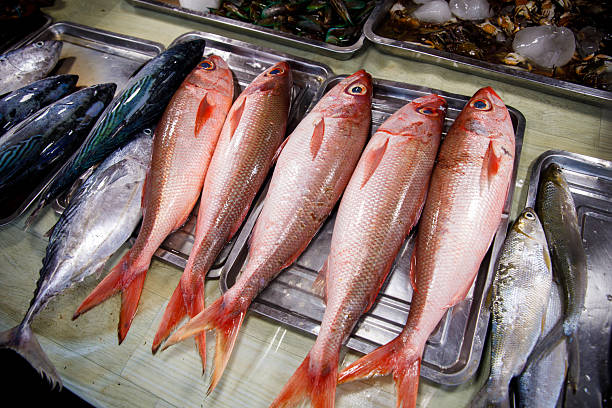
Red snapper is the most well-known variety within a large family of snapper species, and it is one of the most distinctive-looking fish at the seafood counter because of its vivid red skin. The flesh is white, firm, and slightly sweet with a flavor that is more present than cod or tilapia but still accessible to most palates.
Red snapper is one of the ocean types of fish to eat that bridges the gap between everyday white fish and premium varieties. It is priced accordingly. Lane snapper, yellowtail snapper, and mangrove snapper are related species commonly available in Tampa-area markets and equally good at a sometimes lower price point.
This is also worth noting as a connection between the types of white fish to eat and types of red fish to eat categories, since red snapper is technically both: the flesh is white, the skin is distinctly red, and it is among the most prized red-skinned fish at any seafood counter.
Best preparations: Whole roasted with herbs and lemon, pan-seared skin-on, baked with a simple tomato and caper sauce, grilled over high heat.
What to look for at the counter: Vivid red to pink skin that has not faded or gone pale, which is a sign of age. Bright white flesh. Clear eyes if the whole fish is available. Clean ocean smell with no ammonia or strong fishy notes.
Flounder
Flounder is a flatfish with delicate, thin fillets and a mild, sweet flavor that is subtler than most other white fish. The thin fillet structure means it cooks extremely quickly and requires a lighter hand in the kitchen than denser fish like halibut or grouper. It is prized for exactly that delicacy, which makes it a good choice for simple preparations where the fish itself is the primary flavor.
Best preparations: Pan-seared quickly in butter, stuffed and baked, broiled with lemon and herbs, lightly floured and pan-fried.
What to look for at the counter: Very thin, delicate fillets that are bright white. Flounder should look almost translucent at the edges of a fresh fillet. Any browning or drying at the edges indicates age.
Ocean Types of Fish to Eat With a Different Character
These are white or white-fleshed ocean fish that bring something distinctive to the table in terms of flavor intensity, texture, or culinary tradition.
Mahi-Mahi
Mahi-mahi, also called dolphinfish, is a warm-water ocean species with firm, moist flesh and a more pronounced flavor than most white fish. The flesh is white to pale pink depending on the specimen, with large, distinct flakes and a texture firm enough to handle the grill without falling apart. It is one of the most popular sport fish in Florida waters and one of the most reliable choices at Tampa seafood counters.
Mahi-mahi has enough flavor to stand up to bold seasonings including Caribbean spice rubs, jerk seasoning, and Latin marinades while remaining mild enough that it does not overwhelm delicate preparations.
Best preparations: Grilled with a citrus marinade, blackened, tacos, pan-seared with tropical fruit salsa, jerk-seasoned.
What to look for at the counter: Firm, moist flesh that is pale pink to white. The skin, if present, should have the distinctive mottled coloring of fresh mahi. Avoid fillets that look dry, have separated flakes, or smell strongly fishy.
Swordfish
Swordfish is a meaty, firm-fleshed ocean fish that occupies a category of its own. The flesh is more similar in texture to beef or pork than to most other fish, which is what makes it the premier choice for fish steaks. It has a full, satisfying flavor that is more assertive than mild white fish, which makes it particularly suited to bold preparations and high-heat cooking methods.
Swordfish is one of the ocean types of fish to eat that appeals to people who find most fish too delicate or too mild. It is also among the more expensive options at the seafood counter, reflecting its size, the catch effort involved, and its popularity.
Best preparations: Grilled as a steak, marinated and broiled, skewered and grilled, seared rare in the center like a tuna steak.
What to look for at the counter: Ivory to pale pink flesh with a firm, dense texture. Fresh swordfish should have a sweet, clean ocean smell. The grain of the flesh should look tight and even without separation or mushiness.
Striped Bass
Striped bass, also called rockfish on the East Coast, is a prized game fish with lean, firm white flesh and a clean flavor that is slightly richer than cod or haddock. Wild striped bass is seasonal and often commands a high price when available. Farmed striped bass is more consistently available and nearly as good.
It is one of the ocean types of fish to eat that rewards simple preparation, since the natural flavor of the fish is good enough to be the focus of the dish without heavy saucing or complex seasoning.
Best preparations: Roasted whole, pan-seared skin-on, grilled, baked with herbs and butter.
What to look for at the counter: Firm, white flesh with visible silver-striped skin if whole or skin-on. Clean smell. Farmed striped bass should have consistent white flesh without the darker blood line being excessively prominent.
How to Read Freshness at the Seafood Counter
Knowing which types of white fish to eat is only half the skill. The other half is knowing how to evaluate freshness at the point of purchase, because a premium fish purchased past its peak is a worse outcome than an everyday fish purchased at its best.
For fillets at the counter:
- Flesh should be bright and slightly luminous, not dull or matte
- Color should be consistent without brown, gray, or yellow areas
- The surface should look moist but not wet or sitting in pooled liquid
- Edges should be clean and intact, not dried out, ragged, or translucent in a way that signals dehydration
- Press gently if the counter staff permits. Fresh fish flesh springs back. Old fish flesh holds the impression.
- The smell should be clean, oceanic, and faintly briny. A strong fishy smell is not a sign of freshness, it is a sign that the fish is past its best.
For whole fish:
- Eyes should be clear and slightly bulging, not cloudy, sunken, or flat
- Gills should be bright red to pink, not brown or gray
- Skin should be firm and shiny with intact scales
- The fish should smell like the ocean, not like fish
Timing:
Fresh fish is best used within one to two days of purchase. If you are buying fish more than two days before you plan to cook it, buy it frozen rather than fresh from the counter.
Key Food Tampa Carries the Seafood Counter Worth Shopping
If you are looking for a reliable seafood counter to find fresh white fish, grouper, snapper, mahi-mahi, and the everyday varieties that make weekly protein shopping straightforward, Key Food Tampa stocks the fresh and prepared seafood that Tampa households cook with.
From the affordable everyday types of white fish to eat to the premium ocean varieties worth seeking out for a special preparation, the seafood section at Key Food Tampa reflects the full range of what this community’s kitchens actually need. Come in, ask the counter staff what came in fresh, and shop with the confidence that what you bring home is worth cooking.
Frequently Asked Questions
What are the most common types of white fish to eat?
The most widely available are tilapia, cod, pollock, catfish, and haddock. These are found at most grocery store seafood counters and work well across everyday cooking applications.
What are the types of expensive fish to eat at a seafood counter?
Halibut, Chilean sea bass, wild grouper, and red snapper are among the premium white fish options that command higher prices for better texture, more complex flavor, and more limited availability.
What are the best ocean types of fish to eat?
Mahi-mahi, swordfish, striped bass, halibut, and snapper are all excellent ocean fish. Each brings a different texture and flavor profile, ranging from the mild sweetness of halibut to the meaty assertiveness of swordfish.
What are the types of red fish to eat at the seafood counter?
Red snapper is the most well-known red-skinned fish at the seafood counter, with bright red to pink skin and white flesh. Other red or red-tinged varieties include redfish, red drum, and some snapper species common in Gulf waters.
How do I know if white fish is fresh at the seafood counter?
Look for bright, consistent flesh color with no browning or yellowing. The fish should smell clean and oceanic, not strongly fishy. Fillets should look moist but not wet. Whole fish should have clear eyes, bright red gills, and firm skin.
Is white fish healthy to eat regularly?
White fish is lean, high in protein, and low in saturated fat, making it one of the more nutritionally straightforward proteins available. Most dietary guidelines recommend fish as a regular part of a balanced diet. Specific nutritional details vary by species, and individuals with dietary concerns should consult a healthcare provider.
What is the difference between white fish and oily fish?
White fish is lean with low fat content distributed mainly in the liver rather than through the flesh. Oily fish like salmon, mackerel, and sardines have fat distributed throughout the flesh, which gives them a richer flavor and higher omega-3 content. Both have nutritional value, but they behave differently in the kitchen and have distinct flavor profiles.